Sports Photography Melbourne: Composition Secrets from the Sidelines
Melbourne has a particular kind of sports energy. It shows up in the way crowds press forward, in the way the light changes across an oval or a stadium bowl, and in the way athletes move as if they’re always one beat away from something bigger. I spend most of my working weeks trackside, pitchside, and in the corners of grandstands where you can feel the match in your chest. Over time, you start to realise that “getting the shot” is less about luck and more about composition decisions you make before the decisive moment even arrives.
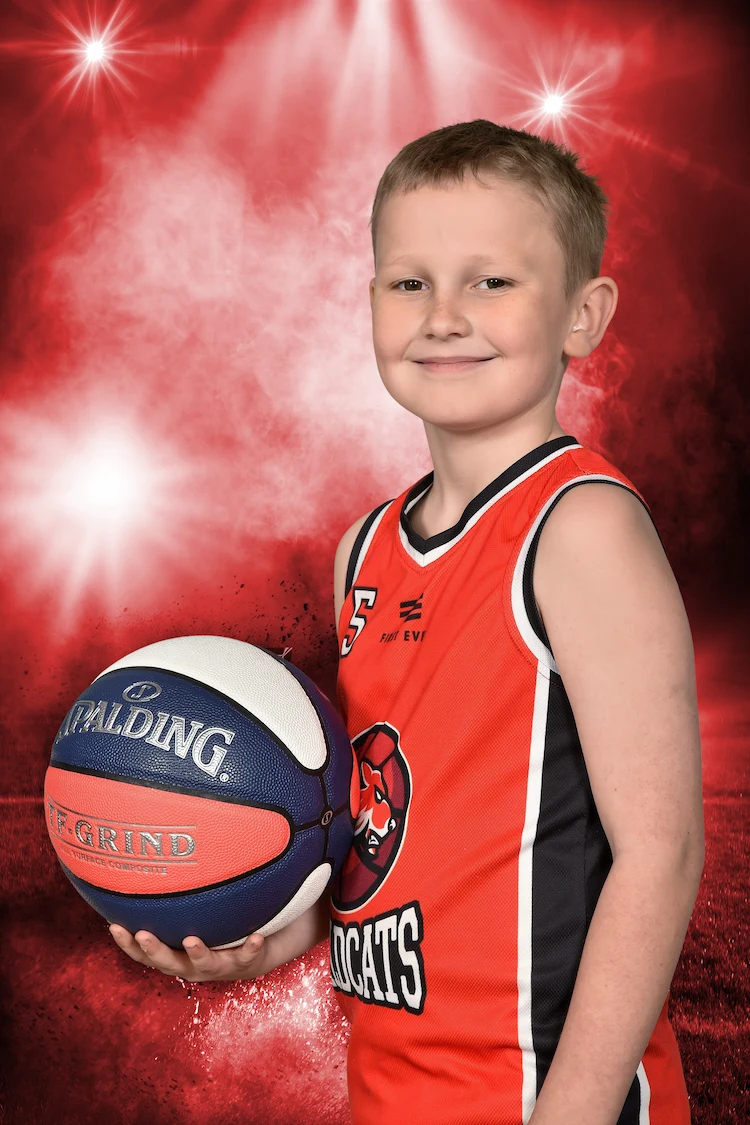
This is where Melbourne sports photography can feel both challenging and rewarding. You’re dealing with fast subjects, shifting backgrounds, and changing light, often with restricted access and short windows to react. The composition secrets below are the things I rely on when I’m shooting as a professional sports photographer Melbourne clients can trust, the kind of work you see from Pure Sport Images when we’re trying to tell the story of the sport with clarity and impact.
The sidelines perspective: where composition starts before the camera is up
People often think composition begins when the photographer raises the camera. On the sideline, it really starts earlier, with body position and sightlines.
If you can, don’t just find “where the action is.” Find where the action will travel across the frame. That means thinking in trajectories, not isolated moments. A soccer winger doesn’t just “run,” they cut, accelerate, and angle their body so the ball can go somewhere. A netball shooter doesn’t simply jump, they rise into a lane that opens and closes depending on defenders. In AFL, a forward’s space is often created by one step that looks unremarkable until it suddenly isn’t.
When I’m scouting for a match, I’m watching the sport’s geometry. Which way are passes likely to go? Where do players cluster? What’s the most predictable background clutter? Then I select a position where the predictable parts line up with what I want the viewer to feel.
A quiet stand, a clean wall, or even a stretch of grass can be more valuable than a fully packed grandstand if it keeps the subject separated. Separation is not just about shallow depth of field, it’s also about tonal contrast, background texture, and the way lines in the environment guide your eye.
Use lines like referees: lead the viewer without crowding the frame
Sports photography Melbourne has a unique challenge. Backgrounds are never neutral. You’ve got advertising boards, signage, spectators, railings, benches, and sometimes bright architectural shapes that pull attention away from the athlete. The trick is to treat those elements as tools.
Roads, boundary lines, tunnel walls, goal nets, and even the edges of the pitch create implied lines. When those lines converge toward the subject, your images feel composed even when the moment is chaotic. When the lines point the other way, the viewer’s eye fights the photograph.
Here’s what I look for in practice:
- Boundary lines or court markings that run diagonally across the frame, creating movement direction.
- Fence rails that form a repeating pattern, but only if the subject stays on the cleaner portion of the pattern.
- Overhead structures where a player’s body can sit beneath a “visual corridor,” reducing visual noise.
This is one reason the best Melbourne sports photographer positions themselves slightly off the most obvious viewing angle. Straight-on action can produce a dull, flat look, and it can also place distracting objects in the same plane as the subject. A small shift can change everything: background alignment, subject scale, and the clarity of motion.
Negative space is your ally, even on busy grounds
Negative space sounds like a design idea, but it becomes practical fast when you’re shooting live sport. Negative space gives your viewer a place to breathe, and it makes the subject’s motion easier to read.
In sideline shooting, negative space often means two things. First, the direction your subject is moving toward should be backed by a calmer area, not a tangle of faces or equipment. Second, your framing should avoid trapping the athlete inside a visual cage, where the borders slice through important context.
I’ll often aim to leave room in the direction of movement, even if it means cropping tighter around the rest of the athlete. That trade-off is worth it. A common mistake is centring the subject and letting the frame fill with irrelevant background. That’s not “careless,” it’s just habit. When you reframe around where the athlete is going, the image suddenly looks intentional.
The “frame within a frame” trick: use the environment to tell a story
On the ground level, you can use structures to create depth and story. The frame within a frame can be literal, like shooting through a goal net or between railings, but it can also be implied: the dark edge of a tunnel, the corner of a scoreboard, the gap between two players, the arc formed by a crowd’s heads.
When the subject sits inside that inner boundary, your photograph feels layered. It gives the viewer a path to follow. It also hides distractions because the environment naturally contains them.
The caution is timing. If the inner frame overlaps the subject at the wrong moment, you’ll clip the athlete’s limbs or cut through the face. Sports composition requires forgiveness for motion, but it also rewards discipline. If you’re at longer focal lengths, the risk of accidental cropping increases, so you have to anticipate the subject’s position relative to your “window” rather than react after they’re already there.
Depth of field: not just blur, but readability
A shallow depth of field can be gorgeous, but in sports it can also be a liability if it hides the expression or the peak contact point. Your job is not to blur everything. Your job is to control what stays sharp and why.
For many bursts, the “peak moment” might be the instant of ball contact, the face looking toward the ball, or the hands meeting the pass. If your focus point strategy doesn’t match your intent, you end up with sharp shoulders and blurred eyes, or a sharp ball that draws attention away from what the athlete is doing.
When I’m shooting at closer distances with longer lenses, I treat depth of field as a budget. I spend sharpness on the athlete’s key action zone, then I accept that the background blur is a secondary benefit, not the main event.
In practice, that means:
- Choose your focus target deliberately, not randomly.
- Be consistent with where you aim focus across sequences, so you don’t “hunt” when the action compresses.
- Don’t assume wider apertures are always better. Sometimes stopping down slightly gives you a cleaner keeper moment through the jump or tackle phase.
This is where a sports photographer Melbourne who works professionally earns their keep. It’s not about using the fanciest setting, it’s about composing with the camera’s limitations in mind and still getting images that make sense when viewed at speed.
Timing is composition: anticipate the shape of the moment
A lot of photographers can capture motion. Fewer can capture meaning. Meaning comes from anticipating the shape of the moment, not just freezing it.
Anticipation is physical. You learn the rhythm of the sport. You watch how bodies load and release. You learn the cues that sit one breath before the action becomes decisive.
For example, in action sports where athletes accelerate, the best composition moments often happen just before full extension. The shoulders tilt, the hips drop, the head angle changes. In photos, those cues create a stronger sense of intent. If you only shoot the instant of impact, you often end up with a moment that’s technically sharp but emotionally flat.
I’ll take a fraction of a second less “peak” for a frame that shows posture, gaze direction, and context. Viewers connect faster with athletes who look like they’re doing something on purpose.
That’s also why sideline position matters. If you’re placed so that the athlete’s body turns toward the camera at the key instant, you get a face, a torso line, and a ball relationship in one frame. If you’re placed so the athlete turns away at the key instant, your composition loses the storyline.
Background chaos: how to simplify without moving
Sometimes you cannot move. The sideline is narrow, the crowd shifts, security restrictions limit where you can stand, and your “perfect spot” becomes unusable after the first quarter.
When movement isn’t possible, you simplify through three composition levers: focal length choice, framing discipline, and crop strategy.
Longer focal lengths compress the scene and reduce the apparent separation between background elements. That can actually make backgrounds worse, because multiple distractions collapse into one busy area. Sometimes a slightly shorter zoom or stepped back position gives you cleaner separation, because the background elements spread out again.
Framing discipline means deciding what to cut out before you press the shutter. If a person, sign, or post sits directly over the athlete’s face or torso, it’s usually not a “nice distraction,” it’s a readability problem. I’d rather give up some distance than sacrifice face clarity.
Finally, crop strategy matters even if you deliver full frames. You can compose as if you’ll crop later, keeping the subject’s head and key action zone in a safe area. But don’t over-rely on crop. If your subject is already too small in-frame, no amount of cropping fixes the loss of impact.
Shutter speed and motion blur: decide what blur you want
There’s a line between motion blur that looks intentional and blur that looks like you missed focus. In sports, you often want the subject sharp and the environment alive, but you can also embrace blur selectively for effect, especially when it supports the direction of motion.
This is a judgement call based on the sport, the lighting, and the speed of the movement you’re capturing. A sprint start benefits from sharpness across the body, while some dynamic crowd moments can accept more blur if the subject still reads.
The composition secret is that blur interacts with framing. If you allow blur, place the subject so that the blur direction reinforces the motion. If your background lines are diagonal, blur can either harmonise with those lines or fight them. I’ve seen beautifully sharp athletes paired with chaotic blur that makes the image feel like a mistake.
A practical on-field checklist you can actually use
When I’m working as a photographer Melbourne on deadline, I rely on quick decision points. These are the mental steps I run, especially when I’m changing positions between plays.
- pick a spot where the subject will likely move into cleaner background, not just where they currently are
- confirm what the viewer will see first by checking face and torso placement relative to the brightest background elements
- watch for “visual collisions,” like a post or another athlete overlapping a face or hands during the peak moment
- decide what will be sharp before you shoot, focus on eyes, hands, ball contact, or a combination based on the sport’s story
- use bursts with a purpose, shoot enough frames to cover the timing window without filling your memory with identical moments
This is not about being rigid. It’s about staying consistent when the pace spikes.
Lens choice as composition: focal length is your storytelling tool
Your focal length isn’t just “reach.” It defines perspective, compression, and how much environment you include. That changes the emotional weight of the photo.
Wider framing brings context. It can show the scale of the match, the crowd, and the field layout. But it also increases background distractions and can distort relationships if the camera is too close to the subject.
Longer focal lengths make the subject feel present and immediate. They also compress distance, which can make background shapes stack into attention-grabbing layers. Sometimes that compression is beautiful. Sometimes it hides the story under a pile of visual noise.
The best approach is to think in sequences. For a match segment, I’ll often gather a range of focal lengths so the narrative has variety. A wide shot might establish the stage, a medium shot can focus on the contest, and a tighter frame can isolate the peak expression.
If you only shoot one focal length, your portfolio looks consistent, but it can feel flat. Sport photography needs contrast. Not only in action, but in how close the viewer feels to the athlete.
Colour and contrast: Melbourne light can make or break readability
Melbourne’s lighting can be gorgeous, and it can also be tricky. Bright sun exaggerates contrast and can blow highlights on faces, uniforms, and shiny surfaces. Cloudy conditions flatten the scene, which makes separation harder if your subject’s kit is close in tone to the background.
Instead of chasing perfect exposure every time, I compose for readability. That means:
- prioritise skin and facial detail over perfect grass colour
- watch for reflective surfaces like medals, tape, or wet patches that can flash in the frame
- consider the background tone relative to the athlete’s kit, a dark jumper against a dark stand can swallow detail, but a dark stand with a bright kit can separate well
If you find yourself always struggling with the same sport or venue, you can fix it by moving a bit, changing your angle, or changing your framing to use a background that already has contrast. Composition is faster than heavy editing when you’re on the sideline.
Where to stand: practical guidance for different sports without rigid rules
There’s no universal “best spot” across every venue and every code, but patterns repeat. You’ll often want to be near the path of the ball or the likely lane of action, and you’ll often want the audience behind the camera to be less prominent than the action in front.
For field sports, I often choose positions where diagonal runs create depth. For indoor or court sports, I look for moments where the athlete’s line crosses a quieter background strip.
In Australian Rules, the rhythm of contest shapes your framing opportunities. Marking contests tend to create clear silhouettes and ball trajectories. Tackles create intensity but also tricky clutter. I’ve learned that a clean silhouette of the subject often beats a chaotic “everything in one frame” scene.
With netball and basketball, spacing is your friend. When athletes are correctly positioned for a play, the frame can look surprisingly calm. If you capture the shot when spacing collapses, the background fills and the athlete’s expression gets lost.
The best Melbourne sports photographer I’ve worked alongside doesn’t rely on luck. They watch the next ten seconds and stand where those next ten seconds will land in the frame.
Delivering professional results: consistency beats single hero shots
Clients want more than one great image. They want a body of work that tells the story and stays consistent in style, exposure choices, and readability. That’s the difference between a hobby burst and a professional sports photographer Melbourne approach.
When you shoot consistently, you can also curate. A team or event might have a hundred matches across a season. If your composition varies wildly from one match to another, selection becomes harder and the end result can feel mismatched.
What I aim for is a blend of hero moments and narrative frames. Hero moments are the obvious action peaks. Narrative frames are the moments that make the peak feel earned: the lead-up sprint, the glance toward a teammate, the body language right after a tackle, the regroup after a turnover.
Pure Sport Images is built around that idea, making sure the images don’t just document, they communicate.
hire sports photographer MelbourneThe most common composition mistakes I see, and how to fix them quickly
You learn a lot by noticing patterns in your own earlier work. I still get caught sometimes, especially when I’m tired or the lighting changes suddenly. These are the recurring issues I watch for:
The first is centring everything. Centre framing can work, but sport rarely unfolds like a poster. If every shot is centred, the viewer gets numb to it. I try to let the action dictate placement, usually with head and key action zone anchored toward one side, leaving room for motion.
The second is letting the background “win.” A bright advertisement, a cluster of faces, or a scoreboard can become a competing subject. The fix is often simple: reframe one step to the left or right, change your angle slightly, or zoom out and re-compose to separate tones.
The third is wrong sharpness priority. If your focus locks onto the wrong plane, the image can feel unresolved even when it looks technically sharp. Decide what must be sharp for the story, and align your focus and framing to that.
Finally, there’s the trap of over-tight framing too early in the sequence. You might think tighter is always better, but early frames often need context to show why the peak matters. Start wider, then move in as the play develops.
Two composition “plays” I repeat across almost every match
Some shooters get trapped in one style. I keep a couple of composition plays I can rely on, so I don’t reinvent decisions from scratch each game.
The first play is the diagonal movement strategy: I look for a way to place the athlete so the implied direction of movement forms a diagonal across the frame. Diagonals create energy. They also make motion look purposeful.
The second play is the subject isolation strategy: I scan the frame for one strong background tone behind the athlete, then I align the shot so the athlete’s face and torso sit against that tone. It’s a readability move more than an artistic one, and it works across bright and muted venues.
If you do those two things often enough, your images start to feel consistent even when the sports code changes. That’s the foundation behind professional sports photography Melbourne that holds up across different teams, grounds, and match timings.
Getting the shot when the moment is unpredictable
The hardest sport photography problems are the ones where your planned framing disappears. Players change direction, the ball deflects, the collision happens half a second earlier than expected. In those moments, the composition choices you made before the action still matter, because they create a frame that can absorb unpredictability.
I keep a “fallback mindset” when the action gets messy. If the planned peak doesn’t land, I look for the next readable moment in the same sequence: the follow-through, the expression right after contact, the body turning to react, the teammate offering a lane.
The sideline rewards photographers who can stay flexible without becoming random. That’s why I prefer disciplined composition moves, then I let the sport lead the exact timing.
If you’re hiring a photographer: what composition should look like in the gallery
If you’re choosing a sports photographer Melbourne to cover an event, you’re not only buying camera skill. You’re buying composition judgment.
In a good gallery, you should see athletes clearly separated from backgrounds, moments that show intent, and variety in framing that matches the sport’s rhythm. You should see less wasted clutter and fewer frames where the viewer has to “figure out” who the photo is about.
That’s what clients mean when they say the images look professional. Not perfect every time, but consistent in how they communicate the action.
When the work is done well, it feels like you were on the sideline yourself, catching that split-second movement, the breath before the kick or throw, the focus on the athlete’s face as everything tightens.
And that’s the real goal of Melbourne sports photography: to make fast, difficult moments readable and emotional, even when the play is moving faster than your eyes.
Pure Sport Images
23 Grandview Ave, Mulgrave VIC 3170, Australia
+61 413 157 614
[email protected]
Website: https://puresportimages.com.au/